0207 608 5500





Search ideas, news and case studies
Blog Categories
What ID Do You Need to Set Up a Company in the UK?
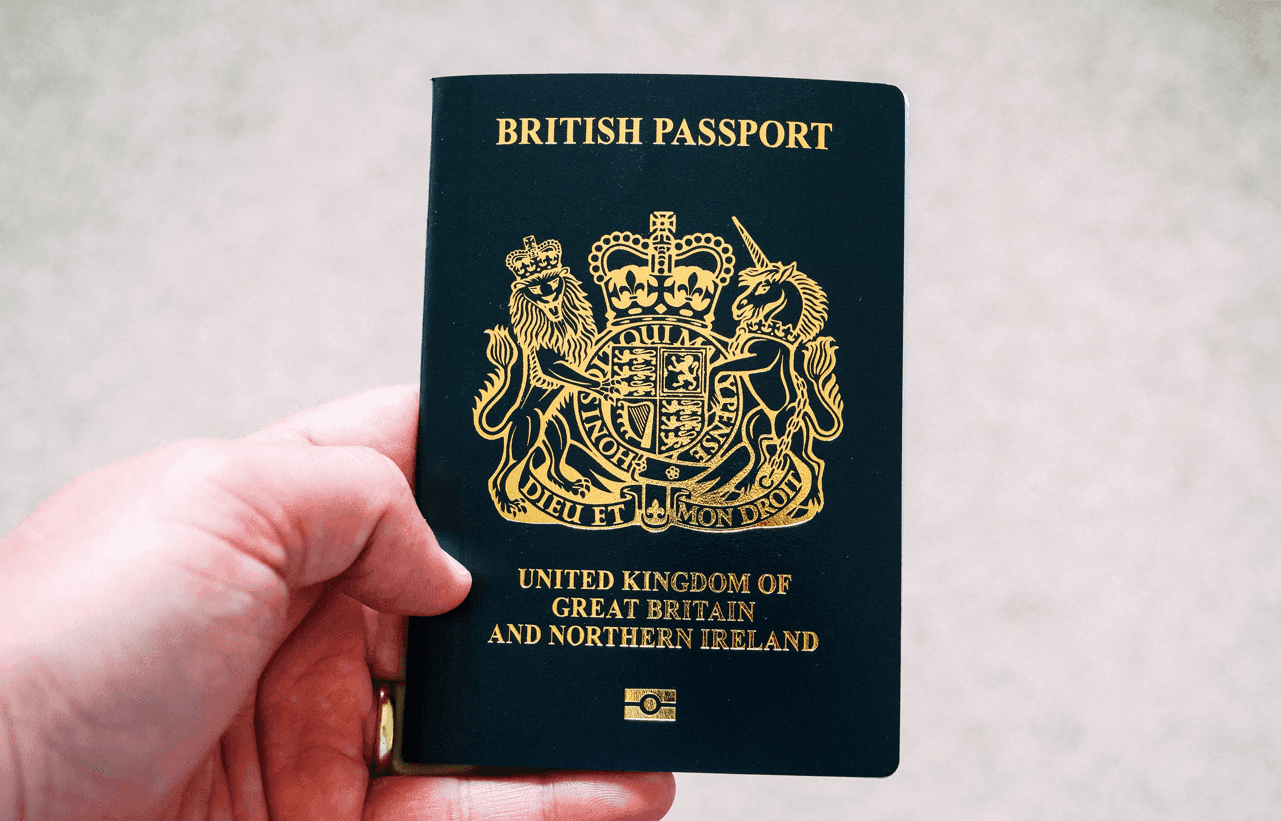

If you're forming a UK limited company, you'll need to prove who you are before your company can go live. This applies to the account holder, directors, and anyone with significant control over the business. This isn't optional, and it isn't down to caution on our part. It's a legal requirement under UK anti-money laundering legislation, and every UK company formation agent must check your identity before they can register your company. Every UK company formation agent is legally required to check your identity before they can register your company.
The good news is that the check itself is simple. Most people complete it in a few minutes using a smartphone or webcam. Below, we'll walk you through why we ask for this, what documents you'll need, how the check works, and what to do if you hit a snag along the way.
Key Takeaways
- Every person involved in forming a UK limited company must pass an ID check before the company can be registered. This includes the account holder, all directors, and all PSCs.
- You need two documents: a valid photo ID (passport, photocard driving licence, or national identity card) and a recent proof of address.
- Bank statements must be from a major UK high street current account, issued within the last 3 months, showing at least one month of transactions. Savings accounts, credit cards, and challenger bank statements are not accepted.
- Documents must be submitted in full. Redacting or editing any part of a document means it cannot be used.
Why do you need to check my ID?
We're registered with Companies House as an Authorised Corporate Service Provider, or ACSP. Not every formation agent holds this status, but we do, and it's what allows us to verify identities on behalf of Companies House. This means identity verification is a legal requirement for anyone forming a company in the UK, and we're required to carry out that check on your behalf, in line with Anti-Money Laundering (AML) regulations and Know Your Customer (KYC) rules.
Put simply, this stops people registering companies under fake or stolen identities, and it helps keep the UK company register accurate and trustworthy.
Do I need to complete an ID check?
We need proof of ID from anyone who falls into one of these three groups:
- The account holder – whoever sets up the account and pays for the service.
- Directors – anyone listed as a director, whether that's a person or a company.
- Persons with Significant Control (PSCs) – anyone who owns more than 25% of the company or LLP.
If you're the account holder, a director, and a PSC all at once, you'll only need to complete the check once. As long as your name and date of birth match up across the system, you won't be asked to repeat it.
What documents do I need for my ID check?
You'll need two things: a photo ID and a proof of address. These document requirements are set by Companies House, so we have to follow them closely, whether you complete your check with us or anywhere else.
Accepted photo ID
Companies House accepts the following as valid photo ID:
- International passport
- Driving licence (photocard)
- National identity card
Your document must be valid and not expired, and what Companies House accepts could vary by country. A passport is the option we recommend, since it tends to move through the check fastest.
Accepted proof of address
Your proof of address needs to show your name and home address, and it has to be recent. In line with Companies House requirements, we can accept:
- A bank or building society statement, issued within the last 3 months, showing at least one month of transactions
- A utility bill (gas, electricity, water, or landline), issued within the last 3 months
- A UK council tax bill for the current period, issued within the last 12 months
- A mortgage statement, issued within the last 12 months
- A home insurance policy, issued within the last 12 months
Which bank statements can I use?
Not every bank statement will do. These guidelines come from the identity verification standards set by Companies House, along with HMRC and Trading Standards, so to verify your address, we only accept statements from major UK high street banks and building societies that carry out strong identity checks when you open an account. Think HSBC, Barclays, Lloyds, NatWest, Santander, and Nationwide.
Your statement also needs to be from a current account, not a savings account, and it must be issued within the last 3 months with at least a month of transaction history on it.
We can't accept:
- Credit card statements
- Savings account statements
- Statements from digital-only or challenger banks
- Statements older than 3 months
- Anything redacted, cropped, or edited in any way
If you'd rather not share a bank statement because it shows sensitive financial information, that's completely understandable. A utility bill, mortgage statement, or council tax bill works just as well and shows less personal financial detail.
Can I redact sensitive information on my documents?
No, unfortunately not. We know some people want to black out account numbers or transaction details to protect their privacy, but this isn't a rule we've set ourselves. Companies House and the Money Laundering Regulations require us to see the full, unedited document before we can verify it.
Our compliance team checks every document closely to rule out forgery. Redacted, cropped, or altered documents make that impossible, so we have to treat them as unusable, and in some cases they can raise red flags.
If privacy is a concern, the simplest fix is to send a document with less financial detail on it, such as a recent utility bill or council tax bill, instead of a bank statement.
How do I complete my ID check?
We use ID verification software called Credas to make the process quick and secure. Here's what happens:
- Take a photo of your ID. This needs to be the original document, not a photocopy or screenshot. Lay it flat, avoid glare, and make sure nothing is cut off.
- Take a live selfie. Stand against a plain background with even lighting, and remove any glasses or hats. Credas checks that your face matches the photo on your ID.
- Upload your proof of address. If you received the document by post, take a clear photo of the original. If you received it online, you can upload the original PDF instead.
Once you've submitted everything, it goes off for verification and you'll get an email confirming whether the check has passed.
The whole thing usually takes about 5 minutes, and you can do it on a smartphone, laptop, or desktop with a webcam. If you're setting up the company for someone else, you can send them a link so they complete their own check.
One important point: your service can't be activated, and your company can't be registered, until every required person has passed their ID check.
What if I fail my ID check?
It happens, and it's usually fixable. Checks can fail for a few reasons, such as glare on your ID, a blurry selfie, an address document that doesn't quite match the requirements, or a match against sanctions and PEPs screening.
You can check the status of your ID check, and which part failed, by logging into your Online Admin Portal and opening the Manage ID Check Status page for your company. Each officer is checked against ID verification, liveness, sanctions and PEPs, and either address and mortality (UK residents) or supporting documents (non-UK residents). Any check that hasn't passed will show as pending rather than verified.
Once you know which part didn't pass, you can head to the relevant support page for that specific check, which walks you through what went wrong and how to try again.
What if I can't complete the online verification?
If the online check doesn't work for you, we can accept certified copies of your documents instead.
Certifying a document means a professional confirms it's a true copy of the original, then signs, dates, and stamps it. You'll need to take your original photo ID and proof of address to them in person, since electronic certification isn't accepted.
If you're a UK or EU resident, your documents can be certified by:
- Us at our office (with your original documents)
- The Post Office
- A bank or building society official
- A chartered accountant
- A solicitor, lawyer, or notary
- Your local town hall
If you're outside the UK or EU, your documents can be certified by:
- A notary public
- A Justice of the Peace
- An embassy official
- A consulate or high commission officer
- A commissioner of oaths (or the equivalent in your country)
A few people can't certify your documents, no matter where you're based. That includes yourself, family members, anyone who lives at the same address as you, a partner, or a colleague from the same firm.
For a document to count as properly certified, the professional needs to:
- Write "Certified to be a true copy of the original seen by me" on the document
- Sign and date it
- Print their name underneath
- Add their occupation, address, and phone number
- Stamp it with their official stamp
Do my documents need to be translated?
If your proof of address is written in a language other than English, you may need to provide a certified English translation before we can complete your check.
This has to come from a certified or "sworn" translator, and the translation needs to include everything from the original: your name, address, the type of document, who issued it, and the date. The translator also needs to add their own statement confirming the translation is accurate, along with their name, signature, date, and contact details.
You'll need to send us both the original document and the certified translation together.
Verifying corporate officers (when a director or PSC is a company)
Sometimes a director or PSC isn't a person at all, it's another company. In that case, we still have a legal duty to identify who's really behind it.
We'll ask for the following two documents:
- Certificate of Incorporation
- Register of Beneficial Owners
These documents need to show the company's full name, registration number, country of incorporation, and how ownership is structured. Once we've worked out who the real individuals behind the corporate officer are, we'll invite them to complete their own personal ID check too.
What happens after my ID check: getting my personal code
Passing your ID check isn't quite the final step. Since November 2025, Companies House has required every director and PSC to hold a personal code once their identity has been verified. This is an 11-character reference number that links your verified identity to your role at the company.
Your personal code belongs to you, not to any one company. If you're a director or PSC of more than one company, you only need to verify your identity once. The same code covers you across every company you're involved with, so there's no need to repeat the check each time you take on a new role.
You'll need this code for things like filing your confirmation statement or being appointed as a director, so it's worth sorting out early rather than scrambling for it later.
If you complete your ID check with us, we'll submit your identity information to Companies House on your behalf. Companies House will then send your personal code directly to you by email, so it's worth double-checking your email address is correct before you submit your check. Once you have it, send it back to us so we can keep it linked to your company records and make sure your filings go through without a hitch.
If you don't already have a personal code, we can help you get one as part of your company formation.
Why go through us instead of Companies House directly?
You can register a company and complete identity verification directly with Companies House yourself. Some people prefer to do it that way, and that's completely fine.
Others choose to go through us because we support you through the whole process, not just the ID check. If something doesn't go through, or a document gets rejected, you've got a real person to speak to who can help you sort it out.
We also offer a range of packages alongside company formation, including registered office and mail forwarding addresses, VAT and PAYE registration support, and ongoing compliance services like confirmation statement filing. That means as your business grows, you can add the support you need without having to piece it together from different providers.
If you'd like to see what's included, you can find out how it works on our site, or get started when you're ready. You can also check out our full ID and address requirements here in our comprehensive guide.
FAQs
Who needs to complete an ID check when forming a UK limited company?
The account holder, all directors, and all Persons with Significant Control (PSCs) must each complete an identity check before the company can be registered. If you hold all three roles yourself, you only need to complete the check once, provided your name and date of birth match across the system.
What documents do I need for a UK company formation ID check?
You need a valid photo ID and a recent proof of address. Accepted photo ID includes a passport, photocard driving licence, or national identity card. Accepted proof of address includes current account bank statements from major UK high street banks, utility bills, council tax bills, mortgage statements, and home insurance policies, all within the required issue dates.
Can I use a Monzo, Starling, or other challenger bank statement for my ID check?
No. Only statements from major UK high street banks and building societies are accepted. Challenger and digital-only banks do not meet the identity verification standards required by Companies House, HMRC, and Trading Standards. Use a statement from a bank like HSBC, Barclays, Lloyds, NatWest, Santander, or Nationwide instead.
What is a Companies House personal code and do I need one?
Yes. Since November 2025, every director and PSC is required to hold an 11-character personal code issued by Companies House. It links your verified identity to your role at the company and is needed for filings like confirmation statements and director appointments. If you verify your identity through Companies MadeSimple, we submit your information to Companies House and they send the code directly to you by email.
What happens if I fail my ID check?
Most failures are fixable. Common reasons include glare on the ID photo, a blurry selfie, or a proof of address that doesn't meet the requirements. Log into your Online Admin Portal and check the Manage ID Check Status page to see which part of the check didn't pass, then follow the relevant support guidance to resubmit.
Do I need to complete an ID check if I'm only a shareholder?
Only if your shareholding makes you a Person with Significant Control, which generally means owning more than 25% of the company or LLP. Shareholders below that threshold do not need to complete an ID check.
What if my documents are not in English?
You will need to provide a certified English translation alongside the original document. The translation must come from a certified or sworn translator and include all key details from the original: your name, address, document type, issuing authority, and date. Send both documents together.
Can a director or PSC be a company rather than a person?
Yes. If a director or PSC is a corporate entity, we require a Certificate of Incorporation and a Register of Beneficial Owners to identify who is behind it. The individuals identified through those documents will then need to complete their own personal ID checks.
This article is for general information only and does not constitute legal or tax advice. Rules and requirements can vary depending on individual circumstances, so it's worth checking the latest guidance on GOV.UK or speaking to a qualified professional before making decisions.