 0207 608 5500





Search ideas, news and case studies
Blog Categories
Sally El-Arifi: Turning Waste Into Worth Through Laffe Goods
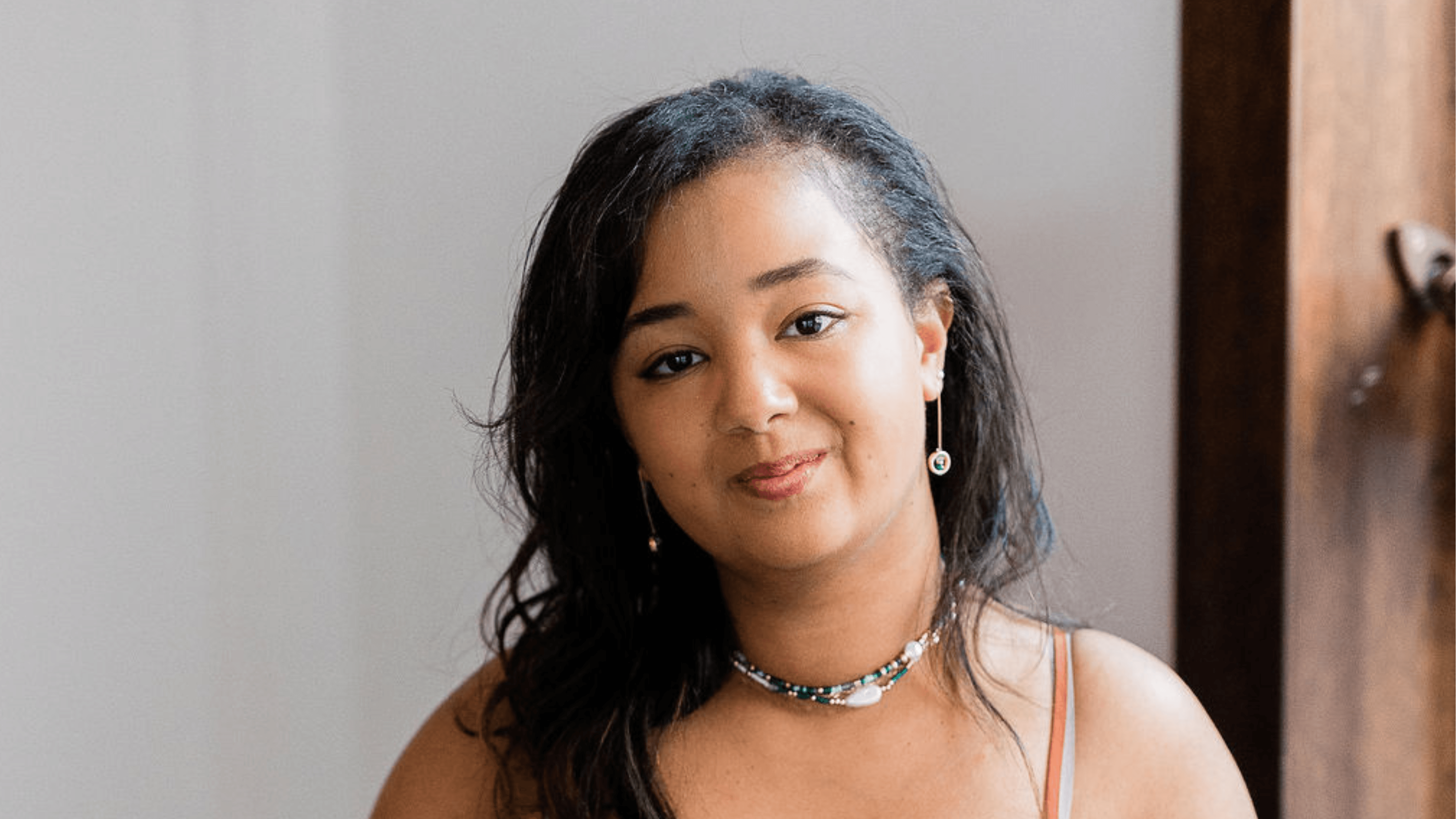
Sally El-Arifi did not set out to start a food brand. What she set out to do was solve a problem she could no longer ignore.
After years working in kitchens and studying food science, she became increasingly aware of how much perfectly usable produce was being thrown away. It was something she noticed consistently, across kitchens, supply chains, and everyday habits, and once she saw it clearly, it became difficult to ignore.
One statistic in particular stayed with her. If food waste were a country, it would be the third largest contributor to greenhouse gases in the world.
That was the point where interest turned into intent.
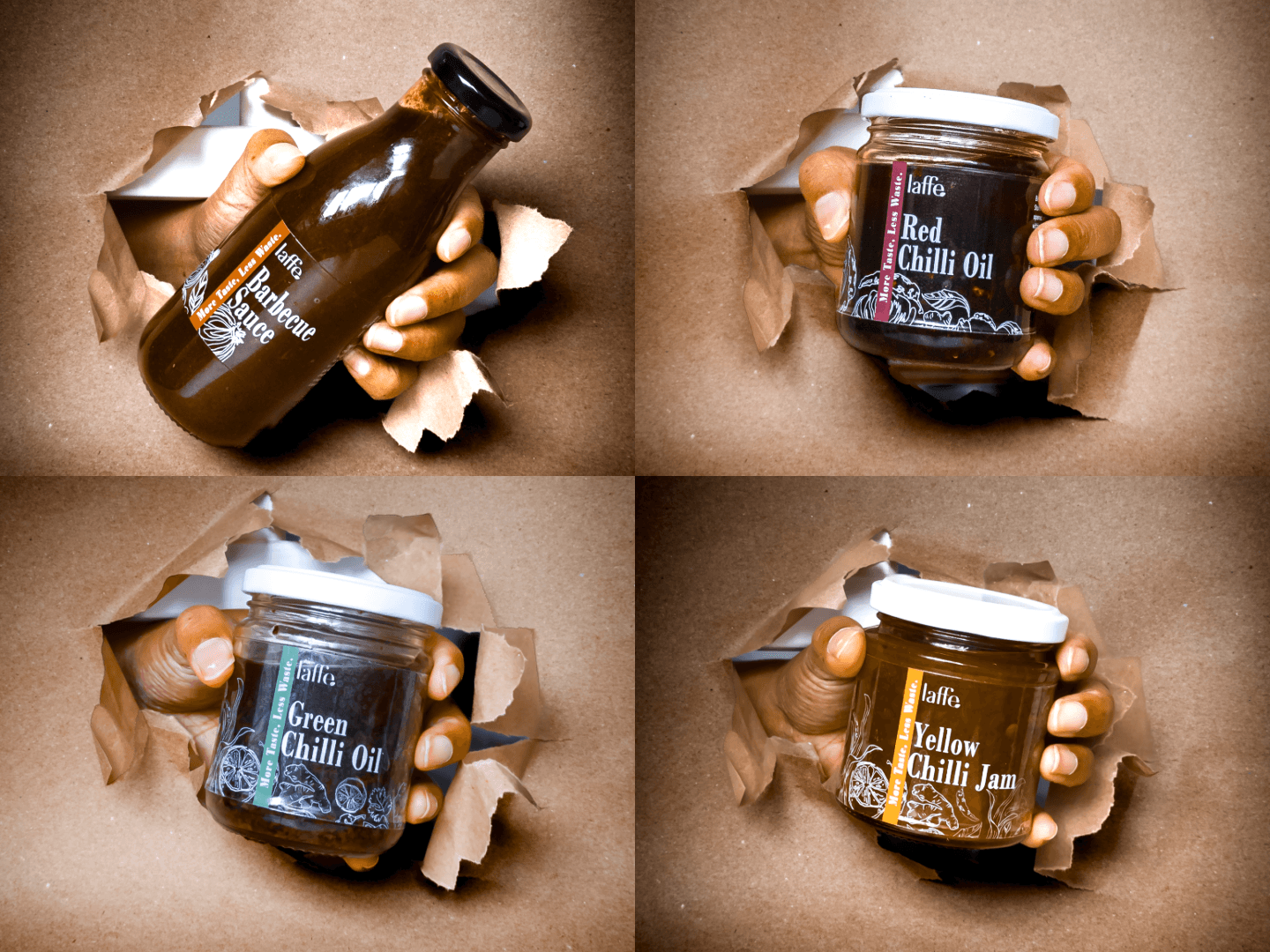
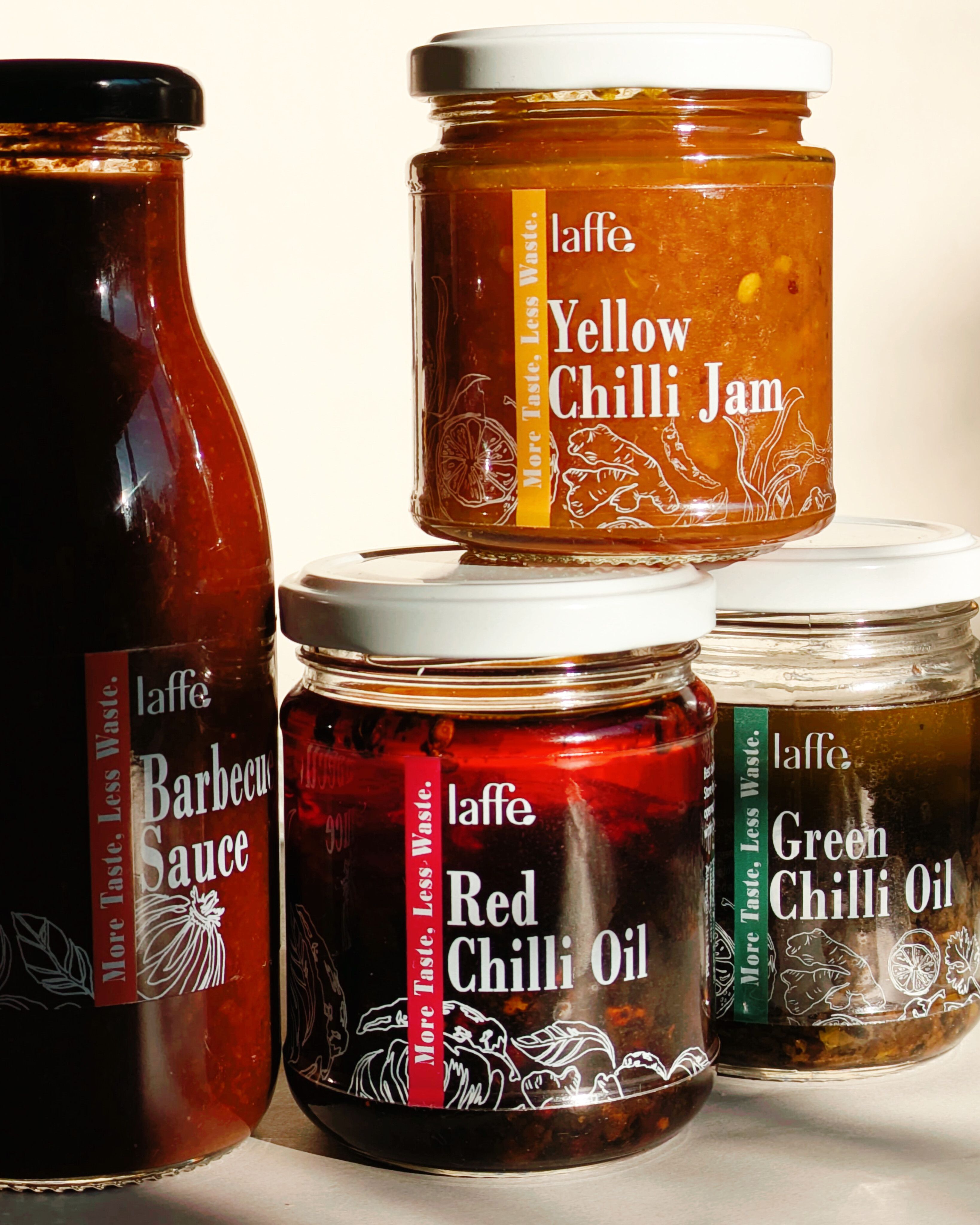
Today, Sally is the founder of Laffe Goods, a food brand built around reducing waste by rethinking how ingredients are used. Through products like chilli oils, jams, and sauces, she focuses on parts of vegetables that would usually be discarded, from stalks to skins and peels.
It is a simple shift in approach, but one that challenges a deeply ingrained habit. Instead of asking what more we need, Sally’s work centres on a different question. How much more could we do with what we already have?
A Longstanding Interest That Found Its Direction
Sally’s interest in food waste had been there for years, but it was not until she saw it up close in a working environment that it started to feel actionable.
While working alongside a coffee roastery, she noticed something most people overlooked. After each roast, large volumes of coffee chaff were being discarded without much thought. It was part of the process, expected and accepted.
What stood out to Sally was not just the volume, but the potential.
It had a rich, caramel-like aroma. Instead of leaving it there, she started experimenting with it in her own time, testing how it could be used in different products.
One of those early experiments led to a cola, which worked far better than expected and proved that the ingredient could be used in a meaningful way.
From that point, the idea began to take shape. Not as a fully formed business yet, but as a way of thinking. If something is being wasted at scale, there is usually an opportunity to use it differently.
The challenge, however, came from regulation. Coffee chaff is currently classed as a novel food in the UK, meaning it cannot be sold commercially without approval. Rather than moving on from the idea, Sally decided to take it further and is now working through the process to change that.
“I’m trying to change legislation around that ingredient,” she says.
Although coffee chaff is not yet part of her current product range, it shaped the direction of Laffe Goods from the start. The focus became clear. Look at what is being overlooked, understand its value, and find a way to bring it back into use.
Learning to Back Herself
For Sally, one of the hardest parts of building Laffe Goods has been learning how to trust herself.
Running a business on your own means there is no one else to sense-check decisions in the moment. No one to reassure you when things feel uncertain. Every choice, from small day-to-day decisions to bigger strategic ones, ultimately comes back to you.
That pressure builds quietly.
“My biggest challenge, I think, and it’s a constant challenge, is imposter syndrome and the constant ups and downs,” she says.
Some days feel clear. The product works, the idea makes sense, and the direction feels right. Then something small shifts, and that confidence can drop just as quickly. A slow week, a setback, or even just comparison to others can be enough to make everything feel uncertain again.
Without a team around her, Sally has had to find her own way of working through that. Instead of looking outward for reassurance, she has had to build it internally, reminding herself of what she already knows and what she has already done.
“I have to remind myself that I’ve overcome challenges before… just trust yourself,” she says.
That shift, from looking for validation to creating it, has been one of the most important parts of her journey so far.
Finding Reward in Progress, Not Perfection
Although Laffe Goods is still in its early stages, one of the most rewarding parts of the journey has been seeing how far it has come in a relatively short space of time.
When Sally looks back at where she started, the difference is clear. What began as an idea has developed into a tangible brand, with products, packaging, and a growing presence.
“I’m quite proud of all those things that I’ve done” says Sally.
That sense of pride is closely tied to how hands-on she has been throughout the process. From designing the packaging to building the website, she has shaped every part of the business herself, which makes each step forward feel more meaningful.
There are still moments where it feels like progress should be faster, but stepping back helps put things into perspective. What once felt like small steps now represent real growth, and that shift in perspective has become an important part of staying motivated.
Learning That You Cannot Do It Alone
One of the biggest lessons Sally has learned is that, despite starting the business on her own, building it is not something she can do in isolation.
Networking, which did not feel essential at the beginning, has become one of the most valuable parts of her journey.
“The most useful thing I’ve found is networking… it opens up so many doors,” she says.
Through events and founder communities, she has connected with people who understand the realities of running a business in a way that friends and family, however supportive, often cannot.
That shared understanding creates a different kind of support. Not just emotional, but practical, with people offering advice, sharing contacts, and helping open up opportunities that would be difficult to access alone.
“You can’t do a business by yourself,” says Sally.
Over time, those connections have not only supported the business but also helped build confidence, making the process feel less isolating.
The Shift from Chef to Founder
Moving from working in kitchens to running her own business was not just a change in role. It was a shift in how responsibility shows up day to day.
In a kitchen, there is structure. Roles are clearly defined, decisions are shared, and even in senior positions, there is a team to rely on.
Building Laffe Goods has been different.
“I really enjoy being my own boss and being accountable for myself,” says Sally.
That independence has been one of the most rewarding parts of the transition, but it also means carrying the full weight of the business. Every decision, big or small, sits with her.
What makes that more challenging is the lack of a clear path. In the early stages, there is no data to guide you and no fixed way of doing things. The same question comes up again and again: where should your time go, and what will actually move the business forward?
“You just don’t know what to do sometimes,” she says.
That uncertainty is not constant, but it appears often enough to shape how the business is built. It means making decisions without complete information, testing different approaches, and accepting that some things will not work.
Over time, that way of working starts to feel more familiar. What initially feels like guesswork becomes more informed through experience, and decisions become easier to navigate.
The shift, then, is about learning to move forward without everything mapped out, and being comfortable building something as you go.
Keeping Sustainability at the Centre
Sustainability sits at the core of Laffe Goods.
Every decision, from ingredients to packaging, is shaped by that focus. Using vegetable scraps helps reduce waste at the source, while choosing recyclable glass packaging reflects a longer-term view, even when it comes with higher costs.
“More taste, less waste. That is our tagline,” says Sally.
It is a simple phrase, but it captures the approach clearly.
It also becomes clear that sustainability is not just a value-driven choice. In many cases, it also makes practical sense. Reducing waste lowers costs and encourages more efficient use of ingredients, showing that environmental and business priorities can align.
Sally is also keenly aware that food waste is often overlooked in conversations around sustainability.
“People don’t realise how much of an impact food waste has,” she says.
Through her products and her messaging, Sally is working to shift that understanding, highlighting that reducing waste at an individual and business level can have a meaningful impact.
What Still Holds Women Back
When reflecting on the broader landscape, Sally highlights a combination of factors that continue to hold women back from starting businesses.
Confidence plays a significant role, particularly the gap between having the ability to start and feeling ready to do so.
Alongside that, there are practical considerations, including financial risk and time constraints, which can be more pronounced for women depending on their circumstances.
“Less time, less money, less confidence… all these things are probably what affect women starting a business,” she says.
These challenges are often interconnected, making it harder to take that first step, even when the idea and capability are there.
Advice for Women Thinking About Starting
For those considering starting a business, Sally’s advice is both simple and realistic.
“If you believe you’ve got a good product, really go for it,” she says.
That does not mean everything needs to happen immediately. Starting small, building gradually, and working alongside other commitments can be a practical way to begin.
She also emphasises the importance of finding support, whether through networking groups, communities, or other founders who understand the process.
Above all, it comes down to trusting that initial instinct and giving it space to grow.
“If you’ve got that feeling in you, that you want to start a business, you should,” says Sally.
A Journey That Is Always Moving
When asked to describe her journey in one word, Sally chooses one that feels familiar to many founders.
A rollercoaster.
It reflects the reality of building something from the ground up, where progress is rarely linear and challenges can appear unexpectedly.
At the same time, it captures the sense of movement, growth, and change that comes with it.
“If it’s worth it for you, go for it. It’s worth it for me.”
 Final Thoughts
Sally El-Arifi is building a business that challenges a simple but widely accepted idea: that waste is inevitable.
Through Laffe Goods, she is showing that with the right mindset, what is often overlooked can become something valuable, both commercially and environmentally.
Her journey is still in its early stages, but it already reflects a clear direction, grounded in purpose and shaped by persistence.
Explore Laffe Goods products, and if you’ve got some spare bananas at home, check out Sally’s Little Book of Bananas for inspiration.
You can also find more no-waste recipes through Baking with Sally, or follow Laffe Goods on Instagram to keep up with the journey.
Inspired by Sally’s journey?
Whether you’re ready to start your business or just exploring ideas, Companies MadeSimple is here to support your next step.
