 0207 608 5500





Search ideas, news and case studies
Blog Categories
Amanda MacCannell: Opening New Pathways Between Science and Industry
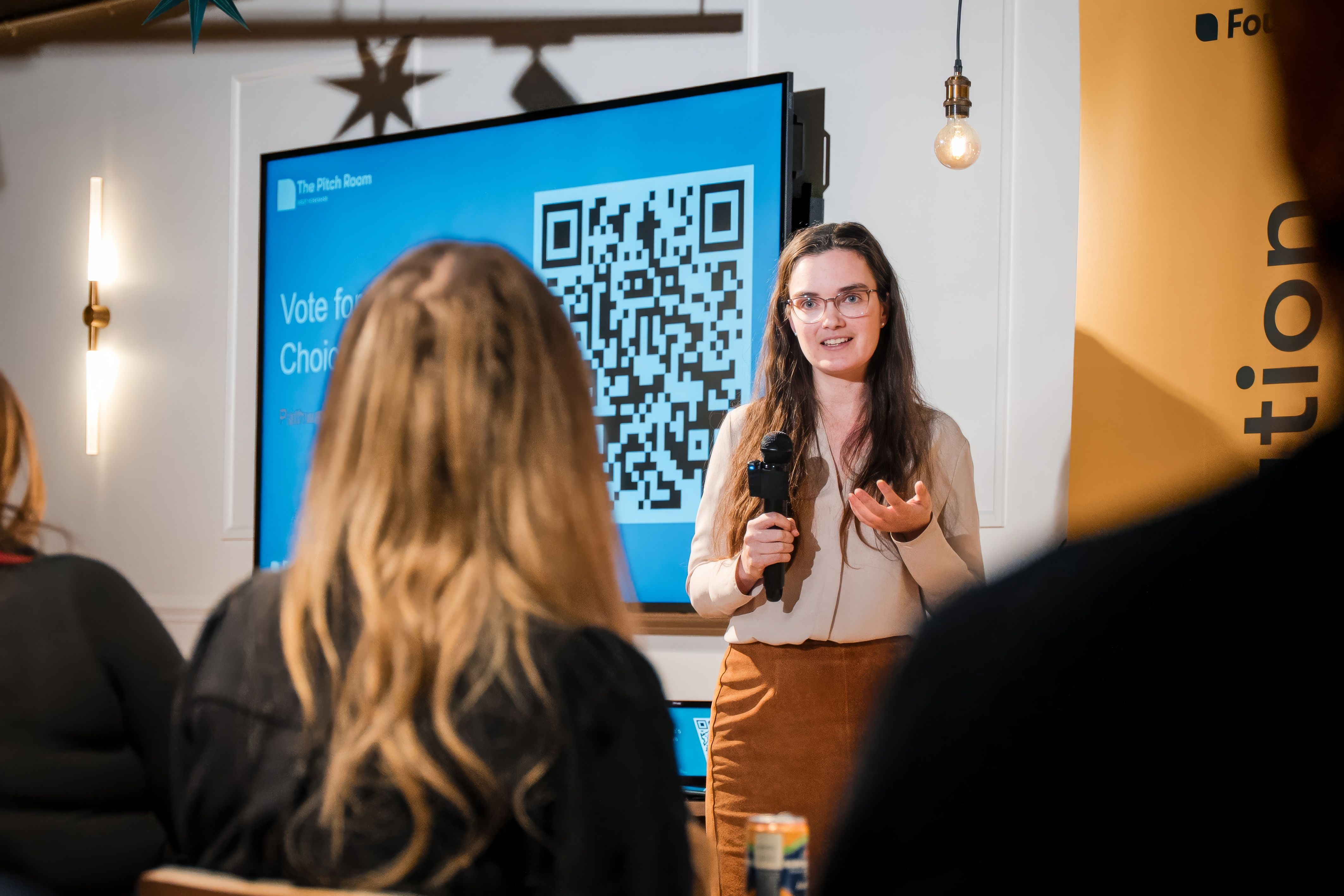

In the middle of a global health crisis, while most people were simply trying to make sense of a changed world, Amanda MacCannell found herself sitting with a question that refused to go away.
Why could science move so quickly for Covid, but not for everything else?
For Amanda, an academic scientist immersed in research, it was not just an interesting question. It was one that exposed a deeper problem in how innovation was working.
Today, Amanda is the founder of Pathways Open, a business designed to help companies and academic scientists find each other faster, more effectively, and with more purpose. At its heart, the company is trying to solve a very human problem hidden inside a structural one: too much knowledge sits in silos, too many valuable connections happen by chance, and too many potentially life-changing ideas take too long to reach the people who need them.
Pathways Open exists to change that. It is a business built on connection, curiosity, and a belief that better collaboration can lead to better outcomes. Amanda’s journey is the story of a scientist who saw a gap, asked difficult questions, and followed the answer further than she expected. In many ways, it is a story about trust: in ideas, in people, and eventually, in herself.
Where the idea began
When Amanda started looking more closely at how research and industry work together, she noticed a gap that was hard to ignore.
So she began speaking to people across both sides. Universities, pharmaceutical companies, researchers. She wanted to understand how these partnerships actually formed.
What she found was a system that relied heavily on existing networks. Collaborations often came through conferences, introductions, or someone happening to read the right paper at the right time.
As Amanda put it, “It was very organic.”
But in practice, that meant inconsistent and difficult to navigate. Opportunities were there, but there was no clear or reliable way to connect the right people at the right time.
That insight marked a shift. Amanda was no longer just observing the system, she was starting to question how it could work better.
At this point, she was still thinking as a scientist rather than a founder. The idea of building a business came later, when her co-founder recognised the potential to turn that gap into something more structured and scalable.
What started as a series of conversations gradually became the foundation for Pathways Open.
Learning a new language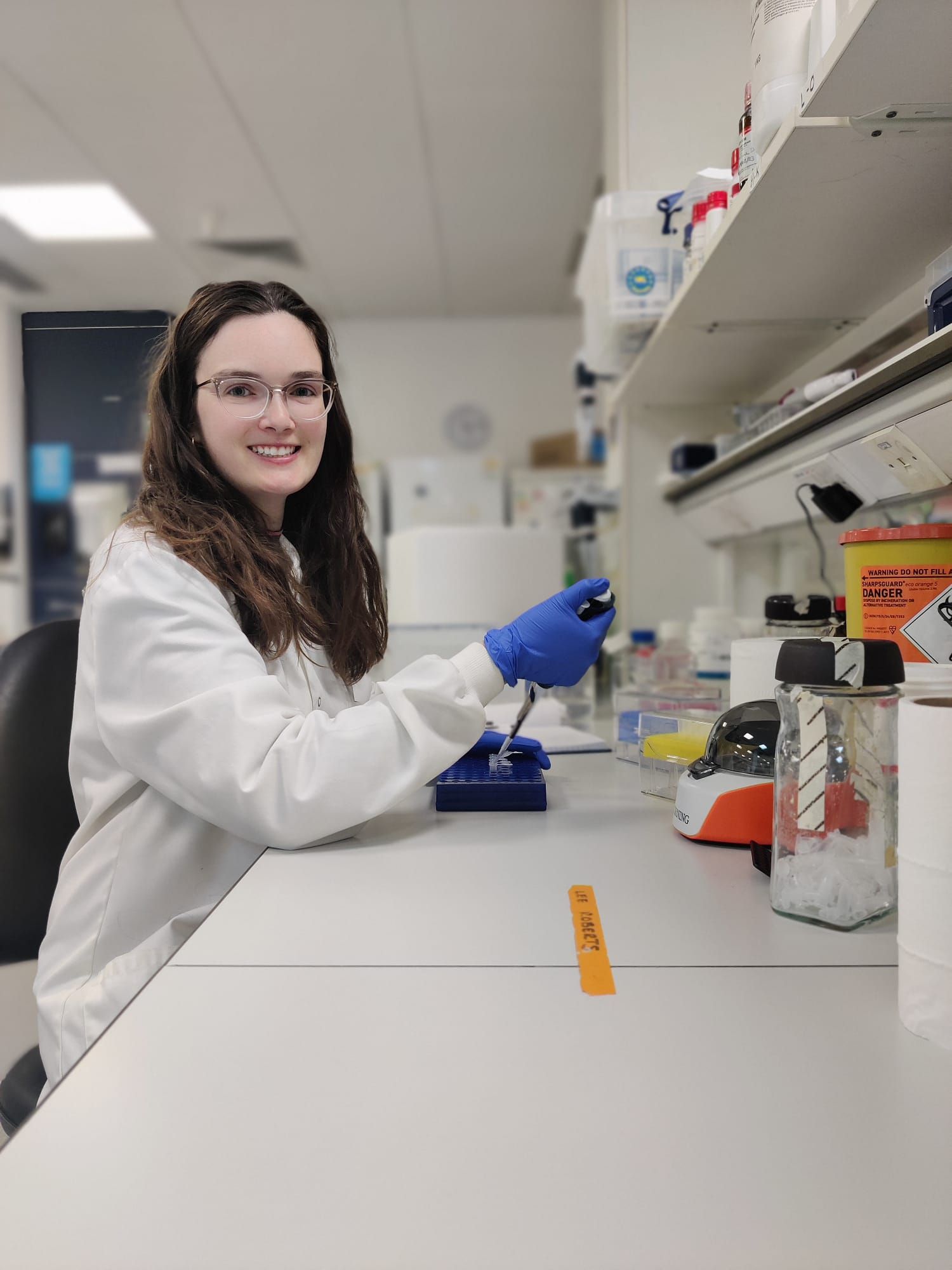
For Amanda, building Pathways Open meant stepping into a world she had never expected to lead in. She knew science. She understood research. Business, though, was different.
Building Pathways Open meant stepping into an unfamiliar space.
“My biggest challenge has been navigating that business world,” she says.
It is a simple line, but it captures something many founders feel and few say plainly enough. Having a strong idea is not the same as knowing how to build a company around it.
There were financials to learn, pitches to prepare, funding conversations to navigate, and decisions to make in areas that did not come naturally. Amanda did not come from a business background, and she had never planned to become a founder. That is what makes her journey feel so relatable. Entrepreneurship is often romanticised as a leap powered by certainty. In reality, for many women especially, it begins in uncertainty and grows through repeated acts of persistence.
Pathways Open did not emerge fully formed. Amanda and her team have had to pivot, test assumptions, and refine their understanding of what the market actually needs. That has meant patience, humility, and a willingness to change course. It has also meant accepting that building something meaningful often takes longer than expected.
The reward of being part of something bigger
For Amanda, the most rewarding part of the journey comes down to the people she works with.
Through Pathways Open, she collaborates with a wide range of organisations, from large pharmaceutical companies to early-stage founders driven by personal experience and a clear sense of purpose. Some bring technical expertise, while others bring a problem they care deeply about and the determination to solve it.
What makes the work meaningful is being involved early, when ideas are still taking shape and direction is not yet fixed. At that stage, the role goes beyond making introductions. It becomes about helping people refine their thinking and build something more defined.
That can mean exploring a product inspired by personal experience, or breaking down complex research and making it easier to understand and apply. The focus is always the same: to build strong foundations before anything moves forward.
That role matters because it is collaborative.
“We’re just a piece of the puzzle, which I really love” says Amanda.
She does not position herself at the centre of the story. Instead, she sees Pathways Open as a way to bring the right people together, so progress can happen more easily and with more purpose.
What Amanda wishes she knew earlier
Looking back, Amanda is clear-eyed about what she would do differently. Building a business has taught her how important it is to take time understanding the market before rushing to build.
Like many founders, she has learned that enthusiasm alone is not enough. A product can be exciting, thoughtful, and well-made, yet still miss the mark if it is not solving the right problem for the right people. Amanda and her team have had to pivot several times, following what the market was showing them rather than clinging to an early assumption.
That lesson has changed how she thinks about growth.
“Now we feel confident that we’ve found the market and we’re building a product for someone” she says.
It is a grounded insight, and an important one. So much founder advice celebrates speed. Amanda’s experience points to something quieter and often more valuable: the discipline to listen, adapt, and build with evidence instead of ego.
That kind of patience is hard-won. It means allowing time for discovery, not treating every detour as failure, and accepting that the most useful version of an idea may look different from the first one.
Finding confidence in community
Amanda works in science and innovation, a space that can still feel male-dominated. Having come through academia, she was already used to that environment, so at first, it did not stand out.
What changed things was stepping into a space designed for women innovators.
Receiving the Women in Innovation Award from Innovate UK gave her more than recognition. It gave her a sense of community.
“Being in a space with other women innovators was really empowering,” she says.
What made the difference was the environment itself. It created space to ask questions, share uncertainty, and have open conversations without feeling judged. In more traditional settings, Amanda often held back, not because she was told to, but because she did not feel fully comfortable.
That shift matters. Confidence is not always about speaking louder. Sometimes it comes from being in a space where you feel able to show up as you are.
That experience has shaped how Amanda thinks about support. Having other women around you, who understand the journey, makes a real difference. It creates space to grow, without feeling like you have to do it alone.
Building a business around better collaboration
Pathways Open is about improving how research and industry work together.
Amanda sees a clear disconnect between the two. Universities and companies are often treated as separate worlds, when in reality they each offer something the other needs. Universities bring knowledge, expertise, and resource. Companies bring application, pace, and routes to real-world impact. When those strengths come together, progress becomes much more effective.
“We really want to get the right people together at the right time to be able to support everyone.” That goal sits at the centre of the business.
To do that, Pathways Open looks beyond traditional signals. Its model draws on a wide range of data to understand what scientists are working on now, not just what appears later in published research. That matters in a space where timing can shape outcomes.
But the value does not stop at the match. Amanda and her team support both sides through the process, helping them understand expectations, navigate funding landscapes, and approach collaboration with more clarity. Their role is to make the process easier, more transparent, and more effective.
At its core, the business is built on a simple belief. Better collaboration leads to better outcomes, and ultimately, that means a greater impact on people’s lives.
The barriers women still face
When Amanda reflects on what holds women back from starting businesses, she points to two things in particular: financial risk and confidence.
The financial side is practical and immediate. Starting a company often involves uncertainty around income, especially in the early stages. For women supporting families, managing households, or already carrying disproportionate risk, that leap can feel especially exposed.
Then there is representation. Amanda is clear that seeing other women do this work matters. It helps women imagine a version of success that feels possible for them too.
“You can’t really envision it for yourself if you can’t see someone else has already been able to do it” she says.
That visibility needs to exist at different levels, in different industries, and in different kinds of leadership. A generic idea of female success is not enough. Women need to see people who look like them, think like them, doing what they want to do. That is what turns encouragement into belief.
Her advice to women starting out
Amanda’s advice is refreshingly direct. Talk to lots of people.
For her, conversation is where confidence grows. It is where ideas become sharper, support becomes real, and loneliness becomes lighter. Entrepreneurship can be isolating, especially in the early stages, and especially for women trying to build something in fields where they are underrepresented. Finding community is not a nice extra. It is part of what helps people stay in the game.
“Find your tribe, find your people,” she says.
That might come through grants, accelerators, incubators, founder communities, or informal networks. The format matters less than the feeling. What counts is having people around you who understand the journey, can offer perspective, and remind you that you are not doing this in a vacuum.
Amanda’s own experience shows how important that can be. The right network can offer far more than introductions. It can offer courage.
A journey that is still unfolding
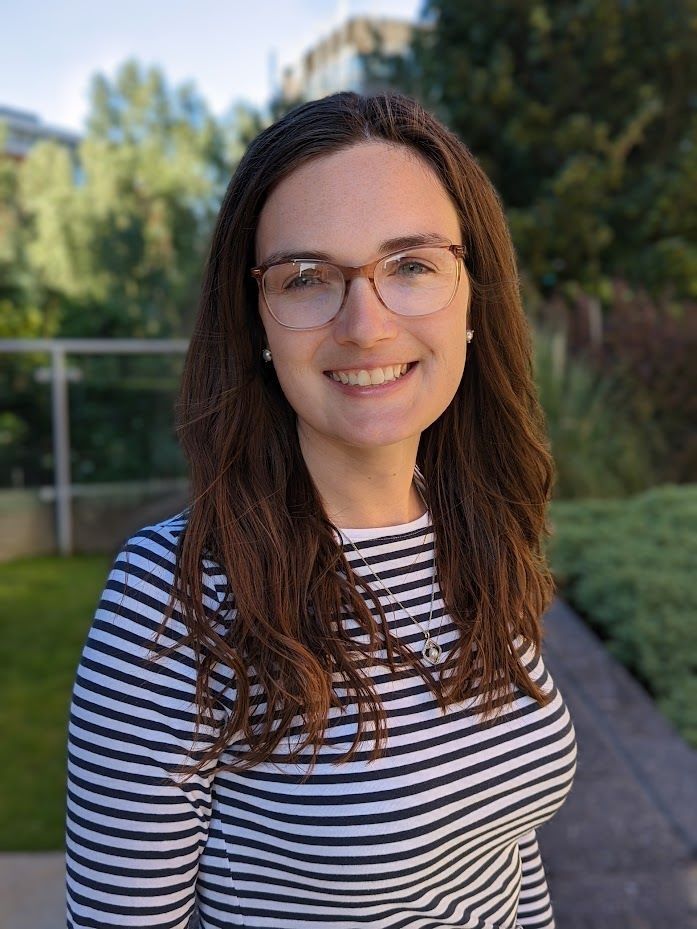
When asked to describe her founder journey in one word, Amanda first thought of something jagged. It had not been linear. It had involved pivots, uncertainty, and long stretches where progress felt slow. Then another word came to mind: upwards.
That feels like the right place to leave her story. Not because everything is finished or neatly resolved, but because Amanda is building in a way that feels intentional, resilient, and real. She is creating something rooted in evidence, guided by purpose, and shaped by collaboration at every level.
There is a quiet power in the way she talks about growth. No bravado. No empty certainty. Just a sense of momentum earned over time.
As she puts it, “Upwards. It’s been a slow burn but we are definitely going somewhere.”
Find out more about Pathways Open.
Inspired by Amanda MacCannell’s journey?
Whether you’re ready to start your business or still exploring the idea, Companies MadeSimple is here to support your next step.
