 0207 608 5500





Search ideas, news and case studies
Blog Categories
The Mores Village: Where Culture, Community and Story Meet
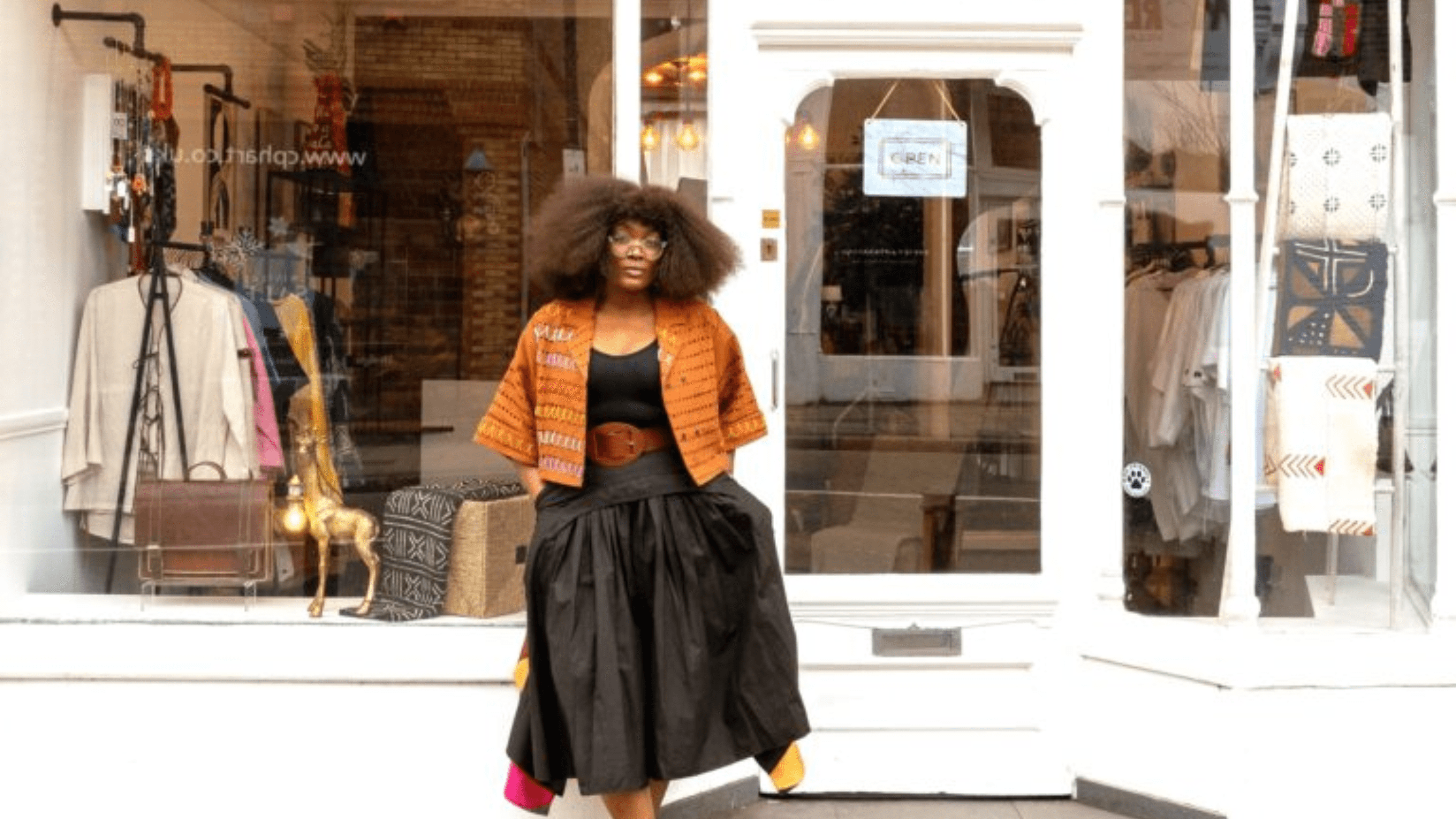
Bolupe Adebiyi did not set out to build a retail space. She set out to change how African stories are seen, shared and understood.
After years working across design, manufacturing and retail, she found herself surrounded by talented African founders. Their products were thoughtful and their stories carried depth. Yet too often, that depth was lost, simplified, or overlooked entirely.
That gap stayed with her.
Today, Bolupe is the founder of The Mores Village, a platform that brings together African heritage brands and presents them with care. Through curated collections, events and cultural experiences, she is creating a space where heritage can be explored in a way that feels real and complete.
At its core, The Mores Village is built on a simple belief: culture is layered, and it deserves to be understood that way.
Where the idea began to take shape
The Mores Village began with a question Bolupe kept returning to: why were so many brilliant African brands still being treated like an afterthought?
For years, she moved between trade shows, founder programmes and accelerator spaces. In each setting, she encountered founders whose work stood out immediately. The quality was clear. The thinking behind it was strong. Yet many of them struggled to reach the audiences they deserved.
The issue was not the work itself. It was how it was positioned.
Again and again, she saw products labelled as “niche” before anyone had taken the time to understand them, often positioned as relevant only to a specific audience rather than recognised for their wider appeal. That pattern became difficult to ignore.
Over time, what she was seeing professionally began to connect with something more personal. Bolupe had grown up with a strong sense of cultural identity and understood how much meaning could sit within something small, whether that was a fabric, a pattern or a tradition. Watching that meaning get overlooked made the gap feel even more significant.
So she decided to build the kind of space she felt was missing.
The Mores Village became a way to connect brands with a wider audience while preserving the depth and identity behind what they create.
Challenging the idea of “one African story”
As the business has grown, one challenge has remained constant: the tendency to group African identity into a single narrative.
Bolupe is clear that this is where the work matters most. The Mores Village brings together founders from different countries, each with their own history, perspective and way of working. Representing that diversity without flattening it requires constant attention.
“We are not uniform, we are united” she says.
It is a distinction she returns to often. Unity allows for connection, but it does not erase difference. Each story carries its own context, and that context matters.
Part of Bolupe’s role is helping people move beyond assumptions. That might mean correcting misconceptions or simply creating space for people to learn. The goal is to deepen understanding, so each story is seen for what it truly is, rather than what it is assumed to be.
More than a shop, more than a trend
The Mores Village may look like a retail concept from the outside, but its purpose runs deeper.
Bolupe wanted people to engage with culture in a more meaningful way.
“I wanted people to experience it as a lifestyle,” she says.
That intention shapes how the space is built. Alongside products, there are books, artworks, music and events that invite people to spend time with the culture rather than pass through it.
Too often, African culture is reduced to a handful of familiar references, from Afrobeats to jollof rice. What is widely known tends to sit at the surface, while everything else is left unexplored.
As Bolupe puts it, “I needed to tell the story to say Africa is more than just jollof rice.”
It is in the detail behind it, the history within fabrics, the meaning carried through language, and the everyday traditions that shape how people live, that a fuller picture begins to emerge. That is what Bolupe is working to create through The Mores Village.
The most rewarding part: the people
When she reflects on what has meant the most so far, Bolupe comes back to one thing: the people.
At the heart of The Mores Village are the founders and makers whose work fills the space. Each one carries their own story, shaped by where they come from and what they have built.
“It’s the people and hearing the stories behind the products, that’s really exciting for me,” she says.
Through her work, Bolupe has met founders from across the African diaspora and beyond. While their journeys differ, there is often a shared sense of purpose in how they speak about what they are building.
Those conversations have become one of the most meaningful parts of the business. They are a reminder that every product begins somewhere, with a person, a decision, and often a risk.
For Bolupe, that is what makes the work feel important.
What she wishes she knew sooner
Like most founders, Bolupe can look back and see where she would have done things differently.
One of the clearest lessons has been financial. In the early stages, she made decisions quickly, which later created pressure she had to work hard to correct.
“I wish I had not rushed into a lot of the financial decisions I had rushed into,” she says.
That experience has shaped how she approaches growth today. There is more care in how decisions are made, and more awareness of what sustainable progress really looks like.
Her reflection also sits within a broader issue. Access to funding remains uneven, particularly for Black women founders. For Bolupe, the principle is simple. Opportunity should be based on the strength of the work, not assumptions about who is behind it.
The reality of building as a woman
When Bolupe talks about being a woman in business, she speaks with clarity, particularly around what it takes to sustain that role over time.
“It takes more intentionality around being successful as a woman,” she says.
That intentionality shows up in everything that surrounds the work. It is in the responsibilities that continue beyond business hours, and in the expectations that shape how women are received in professional spaces. It is in the need to manage multiple demands at once, while still being measured against standards that were not necessarily designed with them in mind.
Over time, these experiences shape more than just how the work gets done. They influence how it is received, how progress is recognised, and how success is understood.
Bolupe speaks about this openly because it matters. Without that acknowledgement, it becomes easy to assume these experiences are isolated rather than widely shared.
Her focus, however, remains on moving forward, recognising the challenge while continuing to build with intention.
Building with community at the centre
As The Mores Village grows, one principle remains central: community.
“It’s very important for community to be at the heart of what we do,” she says.
That intention runs through how the business is built. The connection between creators and customers is visible, not hidden behind the product itself.
Events, collaborations and shared spaces all play a role in this. They allow people to engage more deeply and understand where things come from.
The impact, for Bolupe, should be felt on both sides. By those discovering something new, and by those who created it.
What still needs to change
Bolupe is optimistic, but realistic about what still needs to improve.
She has seen strong interest in The Mores Village, often through organic growth. At the same time, she knows that visibility alone does not solve deeper challenges.
Funding remains uneven. Representation is still inconsistent. Conversations around race and gender are often dismissed too quickly.
“The reason we keep talking about it is because change is not here yet” she says.
For Bolupe, continuing to speak about these issues is part of the work. It creates awareness, but it also keeps the conversation moving forward.
She believes in a future where opportunity is shared more evenly and where founders are recognised for the quality of what they build.
Advice for women building something of their own
For women thinking about starting a business, Bolupe’s advice is clear:
“Be authentic. What makes your story stronger is at the soul of who you are.”
She believes that the strongest ideas come from a genuine place. When something matters to you, that comes through in how you build it.
Her second message is just as important:
“Just go for it. Just do it. Start today.”
Progress begins with action, with refinement coming later, but for Bolupe, that does not mean compromising on ethics and morals. From the outset, how something is built matters just as much as what is created, especially when it involves representing people, stories and culture with care.
A thread in the tapestry of life
When asked to describe her founder experience in one word, Bolupe chooses “journey”.
Because for her, there is no final destination. Only movement. Learning. Rebuilding. Continuing.
“As a founder, our story does not have an ending.”
That perspective shapes how she responds to setbacks and how she celebrates progress. She does not divide the experience into wins and losses. She sees each moment as part of a larger picture, another thread in something still being woven.
It is a calm way of looking at entrepreneurship, and a powerful one. It leaves room for change, for reflection, and for the kind of long-term thinking that meaningful businesses need.
The Mores Village is still evolving. So is she. And that is exactly the point.
The takeaway
Bolupe Adebiyi is building more than a business. She is creating a space where culture is approached with care and where people can engage with it in a more meaningful way.
Through The Mores Village, she is opening up conversations, creating connections, and offering a different way of understanding the stories behind what we see.
Her journey is a reminder that representation is not just about visibility. It is about understanding.
To explore The Mores Village and experience these stories for yourself, visit their website and follow along on Instagram.
Inspired by Bolupe Adebiyi’s journey?
Whether you are ready to start your business or just exploring your ideas, Companies MadeSimple is here to support your next step.
