 0207 608 5500





Search ideas, news and case studies
Blog Categories
Caroline Bowen: Simplifying the Shift to Low-Carbon Homes with Dabalox
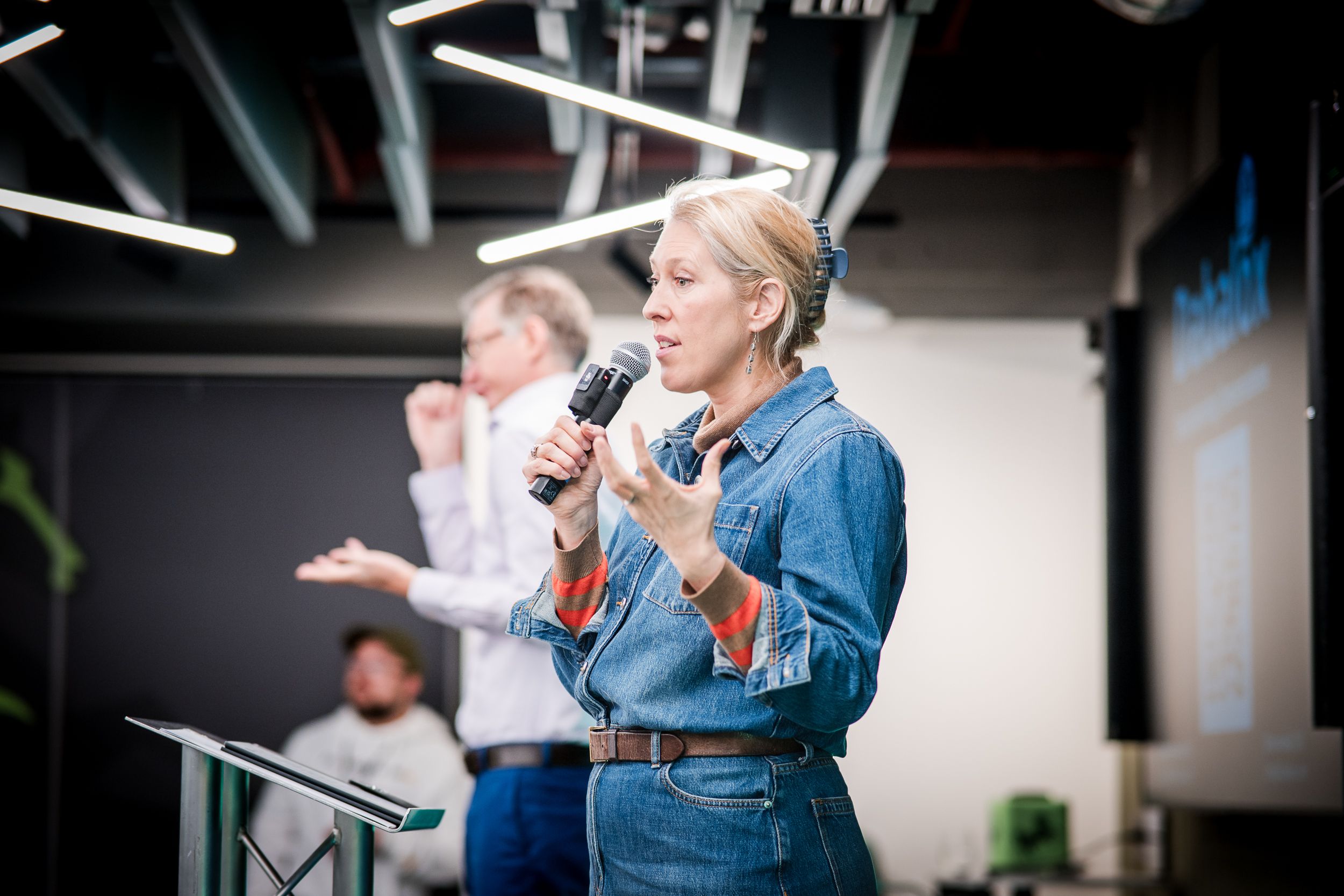

For Caroline Bowen, the idea behind Dabalox began with a moment that stayed with her long after it passed.
Years ago, while sailing in the South China Sea, she saw vast stretches of plastic waste floating across the water. At the time, she was working in FMCG, helping to expand beauty brands into new markets. After witnessing the scale of global waste, returning to that work felt deeply uncomfortable, and it was something she could no longer ignore.
“My personal values and my work values were misaligned,” she says.
At first, that tension showed up quietly. She began looking for ways to bring sustainability into the roles she already held, trying to shift conversations and decisions from within. Over time, that effort started to feel limited, and the more she understood the problem, the harder it became to accept incremental change.
Two years ago, she made the decision to take a different path entirely.
Today, Caroline is the co-founder of Dabalox, a climate tech platform designed to make low-carbon home upgrades easier to understand and act on. By supporting both installers and homeowners, the business focuses on one of the biggest barriers to change: clarity, particularly in moments where technical information and real-life decisions intersect.
Her journey reflects a shift many founders recognise, moving from working within established systems to building something that actively challenges them.
Turning uncertainty into direction
When Caroline left corporate life, she did not leave with a fixed idea or a fully mapped-out plan. What she had was a strong sense of purpose, alongside a willingness to explore where her skills could have the greatest impact.
She joined Carbon13, a venture builder programme focused on climate innovation, which gave her structure at a time when everything felt open-ended. Just as importantly, it introduced her to a community of people thinking deeply about how to solve large-scale problems in a practical way.
It was there she met her co-founder, Chris.
Rather than rushing into a single idea, they approached the early stage deliberately, examining where meaningful impact and commercial opportunity could exist side by side. The UK’s net zero targets provided a useful lens, and one area quickly stood out: the decarbonisation of homes.
While electric vehicles were becoming more visible and widely understood, low-carbon heating remained unfamiliar to most households. That contrast raised a simple but important question around why adoption felt so uneven.
The answer became clearer the more they explored. The challenge was not only access to technology, but understanding how it worked and what it meant in practice.
Where better decarbonisation conversations begin
Heat pumps sit at the centre of the UK’s transition to low-carbon heating, yet for most homeowners, they remain unfamiliar territory. The language around them can feel technical, and the decision itself carries real weight, shaping comfort, cost, and everyday life at home.
Caroline experienced this first-hand during a conversation with an engineer in her own home. As the discussion became more detailed, she realised how quickly understanding can slip, even for someone with a strong commercial background. What should have felt like an informed decision instead felt uncertain.
That moment stayed with her.
When she and her co-founder began speaking to installers and homeowners, the pattern became clear. Installers were spending time revisiting the same explanations, while homeowners often left conversations without the confidence to move forward.
“We realised there were a lot of questions and a lot of confusion,” Caroline says.
Part of the challenge is familiarity. Gas boilers have been part of everyday life for decades, so they feel reliable by default, even when their impact is rarely questioned. Alternatives, on the other hand, are newer, less visible, and often explained in ways that feel overly technical.
“People are so used to gas boilers, they've forgotten they are bad for health and the environment,” Caroline says.
Dabalox was designed to bridge that gap by giving conversations a longer life. Instead of relying on a single interaction, the platform helps capture and organise information so both installers and homeowners can return to it, reflect, and ask questions as their understanding develops.
It is a simple shift, yet one that better reflects how people make decisions, especially when those decisions affect something as fundamental as their home.
Navigating the complexity of building a business
Building Dabalox has brought its own set of challenges, many of which are familiar to early-stage founders.
“As a founder there’s challenges every day,” Caroline says.
The demands are wide-ranging, from strategy and product to operations and communication, often requiring rapid shifts in focus throughout the day. Managing that constant switching can be difficult, especially when every decision carries weight.
A deeper challenge sits beneath that day-to-day reality, centred on knowing where to direct focus over time.
Caroline describes the need to balance clarity with openness, staying committed to a direction while also remaining responsive to new information and opportunities. Early-stage businesses rely on testing, feedback, and iteration, yet progress depends on maintaining enough consistency to move forward with purpose.
Learning how to hold both of those things at once has become a defining part of her experience as a founder.
The power of shared momentum
One of the most energising aspects of the journey has been the community surrounding it.
“I have found it super rewarding to be in a really compelling group of people who want to make change,” she says.
Through Carbon13, Bethnal Green Ventures, Foundervine and the wider startup ecosystem, Caroline has connected with founders who are tackling complex problems with a similar sense of urgency and intent. These relationships offer more than advice, providing perspective, reassurance, and a shared understanding of the realities involved in building something from the ground up.
There is a level of openness within this community that stands out, where people are willing to share ideas, challenge thinking, and offer support in practical ways.
That sense of shared momentum has become a key part of the experience, reinforcing the idea that while businesses may start with individuals, they rarely grow in isolation.
Facing the realities of the system
Alongside the positives, Caroline has also gained a clearer understanding of the challenges within the startup ecosystem itself.
She entered the space with optimism and awareness of the data around funding gaps and underrepresentation, yet experiencing those realities directly has been different. What has stayed with her is how accepted these patterns are, with inequality often acknowledged but not actively challenged.
For Caroline, it has highlighted the importance of continuing to question how systems operate, even while building something new within them.
Bringing a different lens to climate tech
As a woman in a traditionally male-dominated industry, Caroline’s perspective has shaped how she works and leads.
“I think being a woman in a male-dominated space has actually been quite an advantage,” she says.
Her background in customer behaviour and commercial strategy introduces a different way of thinking into an industry that is often led by technical expertise. This has proved valuable when working with businesses that need to communicate complex ideas clearly to everyday customers.
There is also a growing openness within the sector to new perspectives, particularly as more organisations recognise the importance of customer experience alongside technical delivery.
For Dabalox, that combination sits at the centre of its approach, as improving understanding requires both technical accuracy and human insight.
Understanding the barriers women face
When Caroline reflects on what holds women back from starting businesses, she points to a combination of structural and practical factors.
Time is one of the most significant, as women often carry a greater share of family and caregiving responsibilities, which can make the demands of building a business harder to manage.
“It’s a hard thing to be a founder if you are juggling a family,” she says.
There are also challenges around visibility and confidence, particularly when the image of what a founder looks like is still shaped by a narrow set of examples. This can influence how achievable the path feels.
Caroline also highlights the importance of financial confidence, as understanding the numbers behind a business is essential when making decisions and securing investment. More support in this area could help more women move from idea to action with greater confidence.
Advice shaped by experience
Caroline’s advice for aspiring founders reflects her own experience of building with structure and intent.
She recommends joining an accelerator or venture builder programme where possible, as these environments provide guidance, frameworks, and access to networks that can accelerate progress.
For those taking a different route, she suggests creating a structured approach using available resources, as many of the tools needed to build a business already exist and can be used to reduce uncertainty and save time.
The focus should remain on what makes the business unique, allowing founders to direct their energy where it has the greatest impact.
“What you need to reinvent is your business idea, not the how you execute it.”
An invigorating journey
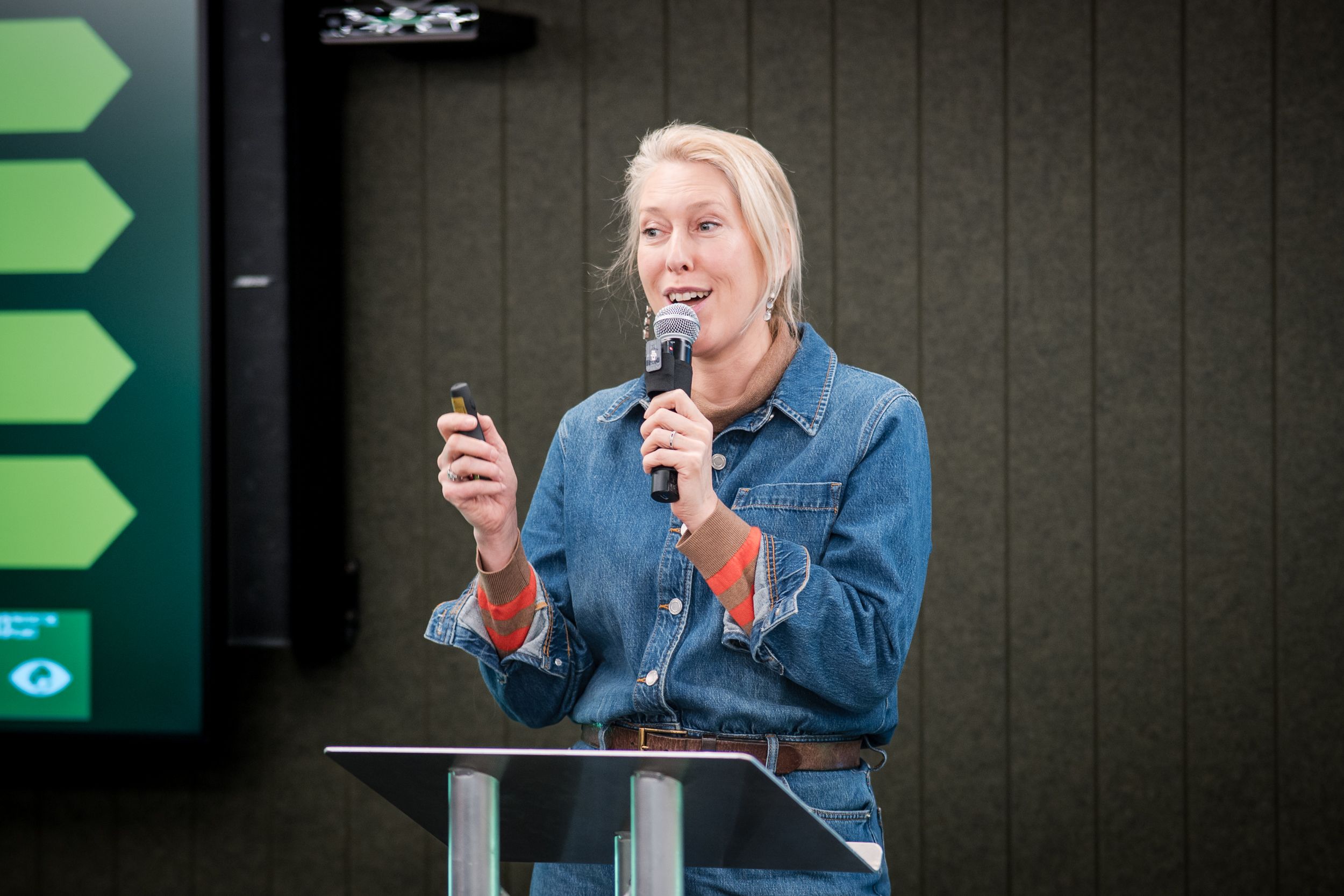
Caroline describes her journey as “invigorating,” a word that captures both the challenge and the energy behind what she is building.
Through Dabalox, she is contributing to a shift that affects how people live, how homes are heated, and how resources are used, while also working alongside others who are committed to solving complex, meaningful problems.
“Working with purpose and working with other founders around you is just really exciting” she says.
It is a reminder that building a business can be both practical and purposeful, with each step contributing to something that extends far beyond the individual founder.
To see how Caroline and her team are helping shape the future of low-carbon homes, you can explore Dabalox and learn more about their work.
Inspired by Caroline’s journey?
Whether you’re ready to start your business or still exploring your idea, Companies MadeSimple is here to support your next step.
